 Türkçe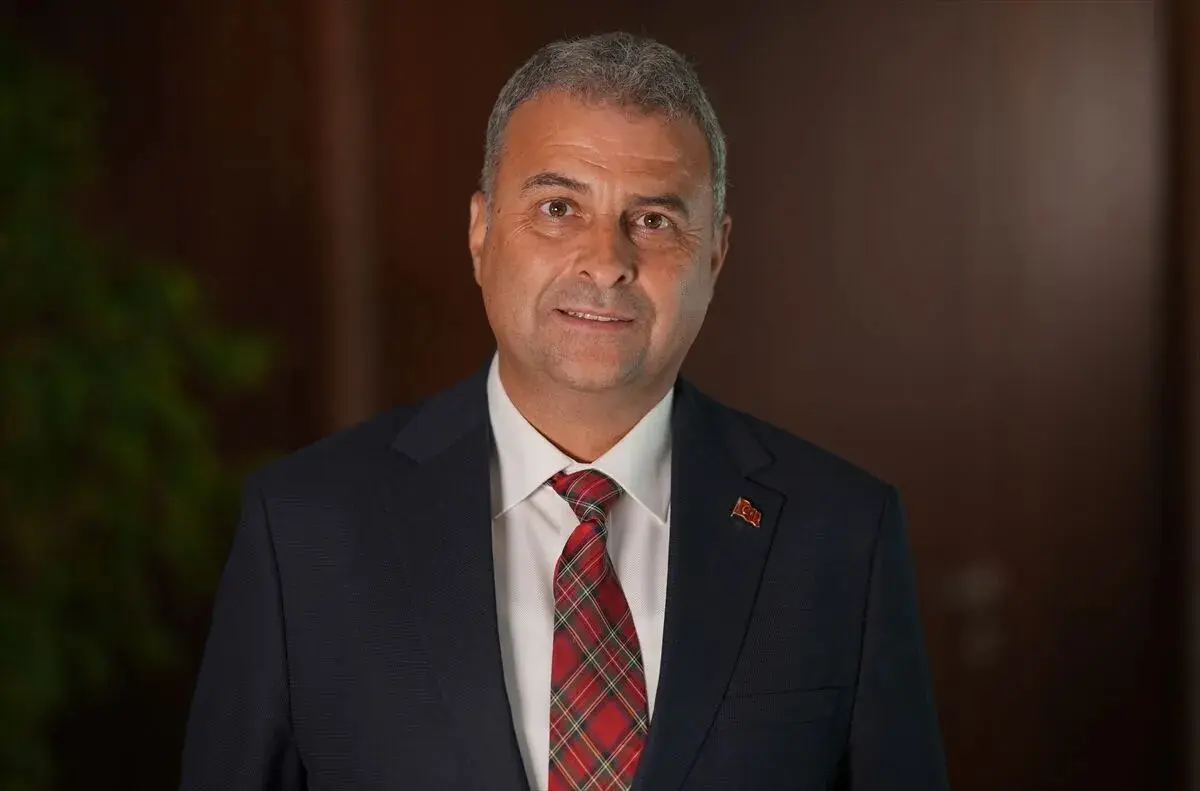
OMSAN Chairman of the Board Ergun Arıburnu stated that rising geopolitical risks in global trade are prompting Asia-Pacific countries to seek alternative logistics corridors for transporting goods to consumer markets.
Speaking on the Anadolu Agency Executive Floor program, Arıburnu emphasized Türkiye’s strategic logistical and geopolitical position, noting that the country serves as a natural bridge between the Asia-Pacific region, Europe and the Americas.
Referring to the ongoing conflicts and tensions in the Middle East and the surrounding region, Arıburnu underlined that trade always seeks safe and reliable routes. He stressed that, thanks to its strong institutional structure, advancements in the defense industry and the strength of the Turkish Armed Forces, Türkiye has become one of the most reliable countries in the region.
Highlighting that logistics has evolved beyond the mere movement of goods into a strategic factor influencing countries’ economic independence, Arıburnu pointed to the recent developments in the Strait of Hormuz as a clear example.
He noted that the logistics industry had not anticipated such a significant impact, explaining that Iran’s suspension of logistics activities in the Strait of Hormuz immediately shifted the strategic balance during the conflict.
Addressing the disruptions in the Strait of Hormuz, Arıburnu emphasized the growing importance of alternative trade routes and Türkiye’s strategic role:
“We have a unique opportunity to strengthen Türkiye’s economy by capitalizing on these developments. Today it may be the Strait of Hormuz; tomorrow it could be the Suez Canal or the Panama Canal. These routes are controlled by specific countries, and nations are increasingly evaluating the consequences of potential disruptions. As a result, particularly Asia-Pacific countries have begun searching for alternative routes to transport their products to consumer markets. Türkiye has been preparing for this transformation since 2007 by diversifying its transportation modes. The Middle Corridor, the Zangezur Corridor and the Hejaz Railway, which has recently returned to the agenda, are all examples of alternative routes and multimodal logistics solutions.”
Investments Continue in Alternative Trade Corridors
Arıburnu emphasized that Türkiye continues to transform its geopolitical advantages into strategic opportunities through significant investments in railway infrastructure.
He stated that Türkiye is no longer merely a transit route for different modes of transport. Instead, the country is steadily becoming a regional logistics hub where large vessels and freight trains converge, cargo is redistributed through feeder vessels, and rail freight is distributed across a wide geography, particularly to Africa.
According to Arıburnu, alongside the Middle Corridor and the Zangezur Corridor, Türkiye is also investing in strategic routes connecting the Turkic States and the Caucasus—corridors expected to deliver substantial long-term growth. He identified the Dörtyol–Hassa Railway and Highway Tunnel Project as one of the most tangible examples of this vision.
He added that these infrastructure investments will enable cargo transported from China to reach the Port of İskenderun, from where it can be distributed further to Africa through integrated maritime and rail connections.
OMSAN Strengthens Its Presence at Tanger Med
Emphasizing the strategic importance of ports and maritime transportation in the logistics industry, Arıburnu noted that at least 90% of global trade is carried out by sea. He added that, as part of the OYAK Logistics Group, OMSAN continues to expand its investments in ports and maritime logistics.
Highlighting Tanger Med Port as a prime example of this strategy, Arıburnu commented on OMSAN’s investments:
“Tanger Med is one of the world’s largest ports. Thanks to its strategic location, it serves as a key gateway to the Mediterranean while providing direct access to the Atlantic Ocean, with Europe and Africa on its doorstep. OMSAN was the first logistics company to establish operations and open warehousing facilities at Tanger Med. When you visit the port today, you will see the OMSAN sign standing above those of many global logistics giants. We recognized the port’s strategic importance early and became the first company to invest there. In finished vehicle logistics, we are also the clear market leader in Morocco and across Africa. Logistics is an integrated business, and it cannot be managed by investing in Türkiye alone. Our vision is to expand globally, and Morocco is one of Africa’s most strategic countries. As cooperation between our countries continues to strengthen, we have further increased our investments there, with the objective of reaching broader African markets.”
Smart Investments Will Shape the Future of Logistics
Arıburnu stated that, alongside these investments, the logistics sector continues to grow steadily, adding that trade volumes exceeding USD 1 billion are expected to double over the next decade.
Assessing the opportunities and challenges facing Türkiye’s logistics sector, he highlighted the country’s ongoing infrastructure investments and emphasized that Türkiye’s highly skilled workforce sets it apart from neighboring regions, particularly Africa, the Middle East and Europe. He also noted that the growing search for alternative logistics corridors is further strengthening Türkiye’s strategic position.
At the same time, Arıburnu pointed out that every opportunity also brings certain risks:
“The greatest risk is failing to complete our investments on time. Logistics investments require a long-term perspective. Building railway networks and ports takes years, demands substantial capital, and in some cases the return on investment may only be realized by the next generation. Another challenge is retaining our highly qualified workforce, as few countries in our region possess human resources of this caliber. Preventing this talent from moving abroad will be critical. With stable governance and smart investments in the years ahead, I firmly believe these challenges will be transformed into significant advantages for Türkiye. Ten years from now, we will be discussing a very different logistics landscape. Our future is no longer defined by being merely a transit corridor. Instead, Türkiye will become a regional logistics hub serving Europe, the Caucasus, the Turkic Republics, the Asia-Pacific region and Africa through integrated multimodal transportation networks.”
Source: AA